plain sailing ]

A co-op, in pictures

No legal reading required. Eight pictures, one idea each, in the order a person actually needs them. Every hard word is underlined and explains itself where it stands.

public, no sign-ina friend's read, not legal advicethe detailed page

all eight, as one page ]

The whole story, straight through

Storybook watercolour of eight river otters seated around a round table, each with one identical gold voting token

01 · Even keel ]

A co-op is an ordinary business, with one unusual rule: every member gets one vote, however much money they put in.

Nobody can buy their way into control of the thing you build. The person who put in the most money still has one hand on the tiller, the same as you.
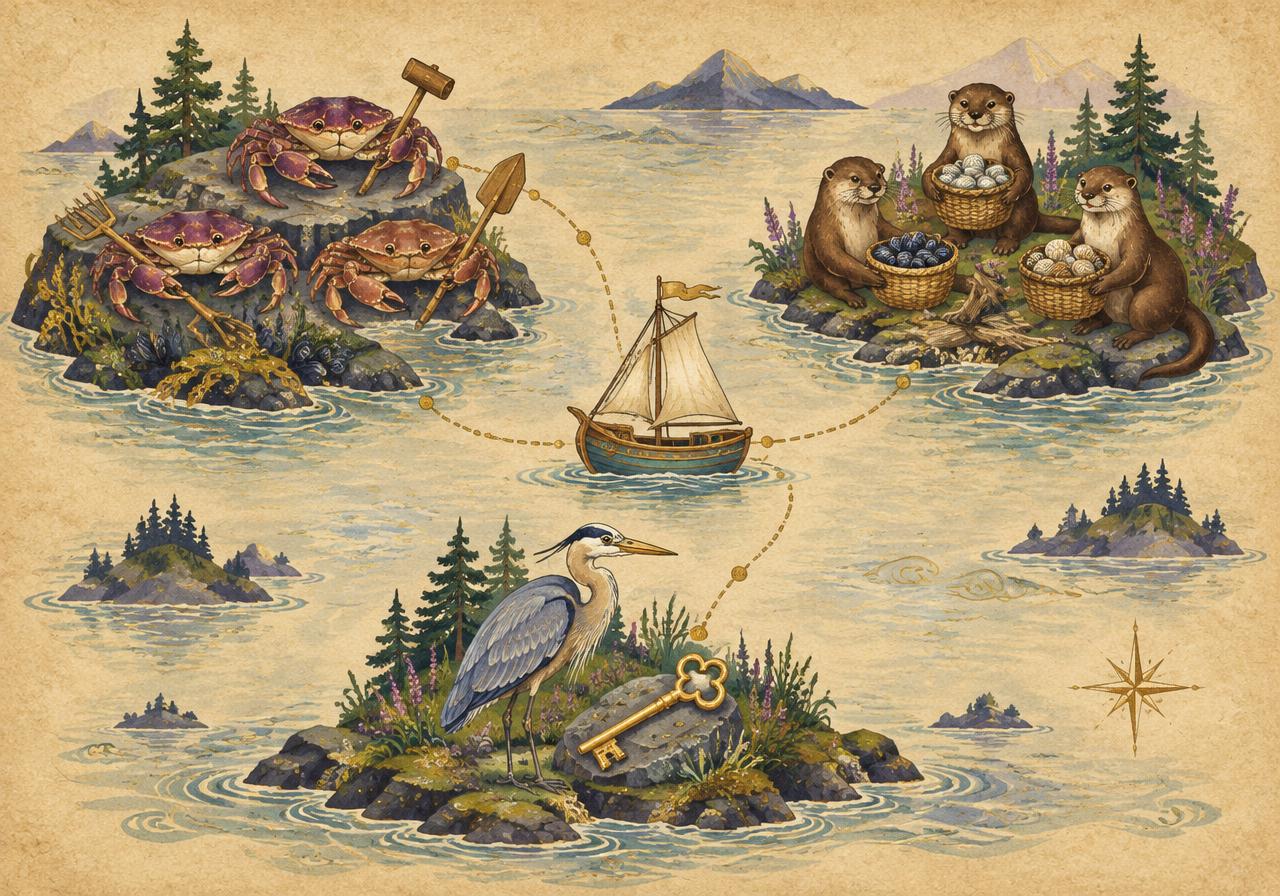

Storybook watercolour map of three small islands: crabs with tools, otters with baskets, and a heron beside a gold key, all linked by dotted gold lines to one shared boat

02 · Who is aboard ]

Before anything legal, answer one question: who are the members?

The workers, the buyers, the growers who sell through it, or the households who live there. Every later decision follows from this one answer, so it is worth a whole conversation on its own.

Storybook watercolour of three boats: one crewed by many otters sharing the tiller, one with a single seal at the helm, one with an empty helm and a gold lantern

03 · Three boats in the same harbour ]

A co-op is steered by its members, a company is steered by whoever holds the most shares, and a nonprofit is steered by a board holding it in trust.

If the people doing the work should own what they build, a co-op is the shape. If you want nobody to own it at all, that is a nonprofit. Neither is more serious than the other.

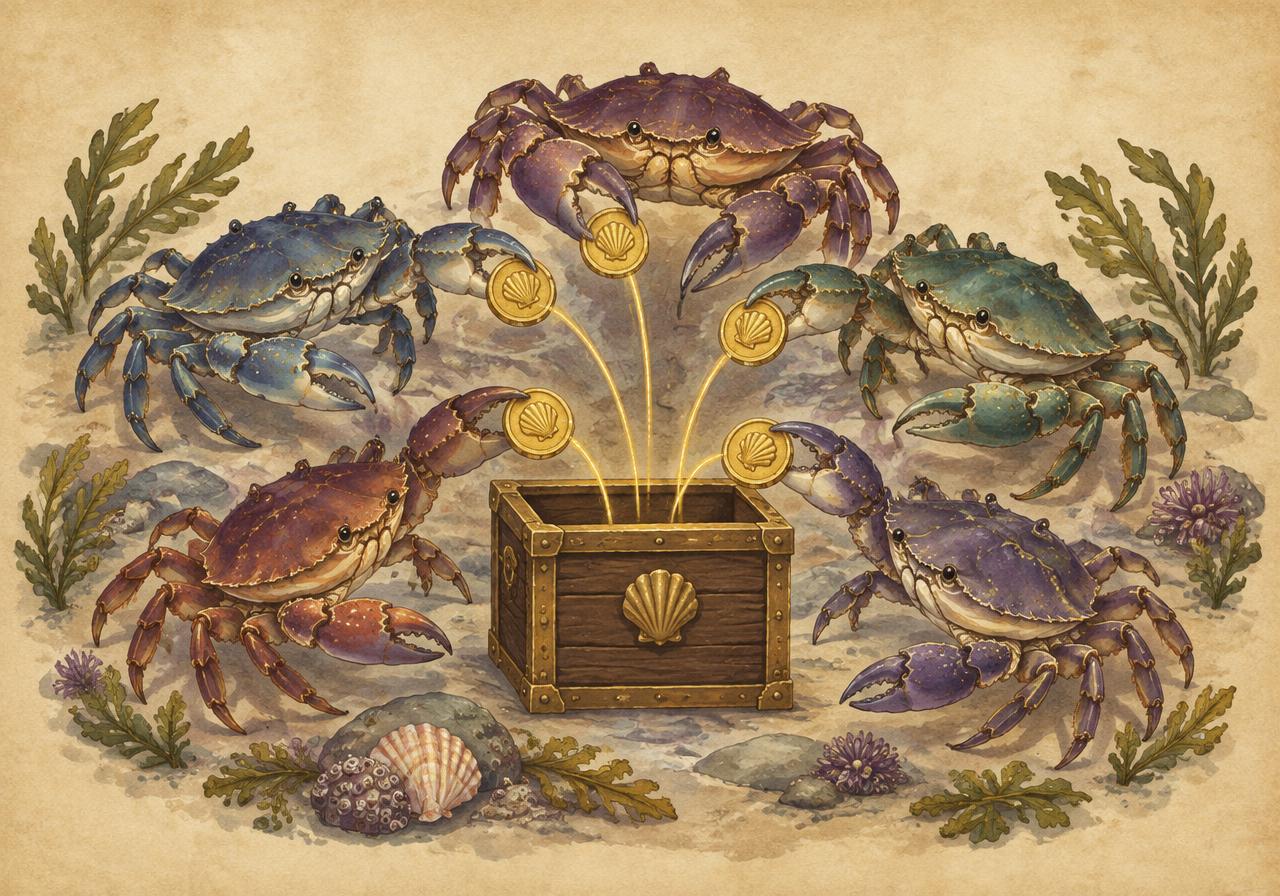
Storybook watercolour of five crabs in a ring, each tipping one identical gold coin into a shared wooden chest

04 · Money aboard ]

Members put money in by buying one membership share, and everybody's share costs the same.

You decide together what a share costs and whether somebody can pay it off out of their earnings over time, so that being short of cash is not what keeps a person out.

Storybook watercolour of coins flowing back out of a chest into three otters' baskets, the fullest basket going to the most work done

05 · Money home again ]

At the end of the year, what is left over comes back to members by how much each one used the co-op, not by how much money they hold.

Decide early how you will measure that: hours worked, goods sold through the co-op, or purchases made from it. Write it down. It is the single most co-op thing about a co-op.

Storybook watercolour of four ribbon-tied scrolls and sealed letters in order along a gold arrow, with a crab holding a quill beside an inkpot

06 · Paper trail, in order ]

The paperwork is short, and it goes in a fixed order: agree the rules, file the founding form, get a tax number, then register for state tax.

There is a right sequence, and the state pages here spell it out for your state with the office, the form, and the current fee. Nothing on this page is a form you have to fill in today.

Storybook watercolour of six otters around a driftwood table with a small brass bell and a scroll, several raising a paw

07 · How the room decides ]

Write down how you will decide before you disagree, not after.

Which decisions need everybody, which need a majority, and who breaks a tie. This lives in your own house rules, which you write yourselves, in your own words.

Storybook watercolour of an otter handing a ribbon-tied bundle of papers to a bespectacled heron at a lantern-lit driftwood desk

08 · What to carry to the lawyer ]

You do not need to know the law. You need to walk in able to answer the questions a lawyer will ask you.

Take these four answers with you: who the members are, what a share costs, how you will measure patronage, and how you will decide when you disagree. That turns a bewildering meeting into a short one.

this week, at no cost ]

What you can actually do before you talk to anybody

Four small things. None of them cost money, and none of them need a lawyer.

  1. 01Write down, in one sentence, who the members are going to be.
  2. 02Ask the two or three people most likely to join whether that sentence matches what they thought.
  3. 03Pick a number for what one membership share should cost, even a rough one, and say why.
  4. 04Write down how you want to decide things when the room disagrees.

the word decoder ]

Every hard word, in a sentence

The same wording you will meet anywhere else on this site. Tap a word to open it.

  • articles of incorporation

    The short public form that brings the co-op into legal existence. Filed with the state office, usually a page or two: name, address, purpose, and who is signing.

  • bylaws

    The co-op's own house rules, written by the members: who can join, how you vote, how surplus is shared, and how somebody leaves. Not filed with the state in most places, but the document you will live inside.

  • capital account

    A running record of the money the co-op is holding on a member's behalf: what they paid in, plus retained surplus credited to them, minus anything paid back out.

  • dissolution

    Closing the co-op down and settling what it owns and owes. Administrative dissolution is when the state closes it for you because a yearly filing was missed.

  • EIN

    The co-op's federal tax number, from the IRS. Free, and applied for online. Think of it as a Social Security number for the business.

  • member class

    A group of members who join on the same terms and hold the same kind of membership, for example workers in one class and buyers in another.

  • operating agreement

    The internal rulebook of an LLC. Co-op behavior can be written into one, but the law will not hold it there for you the way a cooperative statute does.

  • patronage

    How much a member used the co-op in the year: hours worked, goods sold through it, or purchases made from it. Surplus comes back to members in proportion to this, rather than to how much money they put in.

  • registered agent

    A person or service with a street address in the state who agrees to receive official mail for the co-op. It can be one of the members.

  • statute

    A law your state has passed. A citation like a chapter number is just its address in the law books.

  • surplus

    What is left over at the end of the year after the co-op has paid its costs. In an ordinary company you would call it profit.

Try one in a sentence: surplus comes home to members by .